Thursday, January 16, 2014

10 Reasons sex education has nothing to do with vularity

 Published: January 15, 2014l
Parents are not interested in bearing the awkwardness of gathering their sons and daughters at the family table, and giving them the dreaded ‘birds and bees’ talk.
While it is truly comforting that Punjab Chief Minister, Shahbaz Sharif – among many others — is taking such lively interests in our students’ moral upbringing, he may have mistaken ‘sex education’ for ‘vulgarity’.
Here’s what he may be missing.
1) Sex education does not encourage elicit activities
Does having an airbag in your car make you feel like driving your Honda off a bridge? Is my plane more likely to crash if the cabin crew shows me a flight safety instructions video before take-off?
An examination of 73 studies on the subject has revealed that comprehensive sexual education does not make students more sexually active than they already are. It neither hastens one’s first sexual experience nor does it increase the frequency of sexual activity.
It’s only a moralist’s greatest fear, therefore, it has no scientific leg to stand on. These programs are designed strictly to educate, not titillate.
2) Somebody has to tell them
Let’s face it. Parents are not interested in bearing the awkwardness of gathering their sons and daughters at the family table, and giving them the dreaded ‘birds and bees’ talk.
Teenagers are left with two options: Learn about safe sex from a qualified teacher or learn from other neighbourhood kids who just happened to stumble upon some ‘information’ they weren’t supposed to know.
I strongly recommend the first option.
3) Its happening, whether you teach it or not
Our current approach to the problems related to sexual health, is that of an ostrich, refusing to discuss the matter and pretending that it makes the problems go away.
Unfortunately, it doesn’t. It’s not an easy discussion but that doesn’t make it not worth discussing.
4) The human body isn’t ‘vulgar’
Your natural physical form isn’t sin turned flesh. Just as it’s important for us to learn about the functions of our brains, livers, hearts, stomachs and limbs, it is important to learn about the sexual organs and the possible disorders that may afflict them.
5) It helps prevent Sexually Transmitted Diseases (STDs)
This is a no-brainer but its significance is repeatedly downplayed.
We teach young students the importance of washing their hands before eating and bathing regularly, avoiding mayonnaise that has been left out of the fridge for too long and getting vaccinated.
But we happily gamble with their sexual health, rolling the dice and hoping they’d learn the do’s and don’ts on their own somehow. The odds of that happening, regrettably, are too low for comfort.
In one study conducted in Faisalabad, nearly 80% of the STI patients had either never used condoms, or had not heard of them. The lack of use, or even knowledge, of the single most basic barrier available to the population for safe sex is alarming. It is living proof of the fact that we cannot rely on sheer chance to have this information disseminated to the public. Active steps must be taken.
6) It helps avoid unwanted pregnancies
Pregnancies among teenagers who are neither psychologically nor socially equipped to handle them can, and does, destroy lives.
In Pakistan, where termination of pregnancy is not legal except for very specific circumstances, accidental pregnancies translate into an additional problem of back-alley abortions. These involve extremely unsafe procedures that can cause permanent harm and even death.
In Pakistan, studies have revealed that as high as 18% of all maternal deaths are attributed to these abortions. A reduction in the commonness of teenage abortions could bring down the number of illegal abortions too.
7) Sexual imagery is everywhere, sex education isn’t
When one’s senses are constantly bombarded by the latest Bollywood item songs, sultry advertisements and suggestive jokes and stories, it can easily warp one’s understanding of the dynamics of a mature sexual relationship.
If not supplemented with proper education, the effects can be catastrophic. It is virtually impossible to eliminate this imagery from our lives but it is possible to add lessons on sexual health in class curriculum.
8) It encourages healthy discussion on sexual health
In a country where it’s taboo to talk about breast lumps or disorders of the reproductive cycle, it helps tremendously to provide the students a safe academic environment to share their concerns in.
We cannot outsource even the most basic information on sexual health to healthcare professionals, who are often already overwhelmed by the patient load. One doesn’t queue up outside the doctor’s office to learn about the benefits of hand-washing, therefore one doesn’t need to do that to learn about condoms either.
9) “Past generations survived without it. Can’t you?”
Older opponents of sexual education like to point out how they managed to learn about sex without the help of a teacher and so can the new generation.
I imagine people also got by without penicillin or know-how on disease prevention for the longest time, or we wouldn’t be here to discuss this matter today. But maybe the incident rate of unwanted pregnancies and diseases was higher and the quality of life lower?
10) Denying education is immoral
Sex education has been proven to reduce unwanted pregnancies and curb the spread of sexually transmitted diseases.
The only thing here that can be definitively classified as ‘vulgar’, is denying our young people the opportunity to educate themselves about sexual health.

Link: http://blogs.tribune.com.pk/story/20558/10-reasons-sex-education-has-nothing-to-do-with-vulgarity/

Tuesday, November 12, 2013

Myths & Facts on Child Sexual Abuse

Myth: Child sexual abuse only takes place in poor families.
Fact: Child sexual abuse takes place at every income level regardless of social standing and family background.

Myth: Usually there is terrible physical violence accompanying child sexual abuse.
Fact: In most reported cases the abuser is not physically violent but rather uses emotional manipulation and blackmail.

Myth: Child abusers are usually psychotic and/or of low intelligence.
Fact: Only a small number of abusers exhibit psychotic tendencies or display low intelligence. Abusers are usually people one mingles with and who seem to be socially well adjusted.

Myth: Sexual abuse generally occurs outside the home and the abusers are strangers.
Fact: Most children are sexually abused in the homes. In a predominant number of cases, the abuser has the trust of children and their families and access to their homes.

Myth: Reporting of child sexual abuse can cause more harm than good.
Fact: If child sexual abuse is not reported then the same abuser may harm other children or may target the same child again.

Courtesy: Society for the Protection of the Rights of the Child (SPARC)
http://beta.dawn.com/news/791422/myths-and-facts

Thursday, October 24, 2013

Sindh Assembly passes HIV & AIDS Law to control the disease


In light of the rising number of HIV/AIDs cases in Sindh, the lawmakers of the provincial assembly passed a law in September  to control the disease, adopt measures for its treatment and protect its patients.
Sindh parliamentarian and law minister, Dr Sikandar Mandhro, who moved the bill, said that since the health department has been devolved to the provincial government under the 18th Amendment, there was an immediate need to make a law to control the transmission of HIV and support the people living with this disease. “This preventive disease has killed more people than the atomic bombings in Hiroshima and Nagasaki in Japan. Unfortunately, no sincere efforts to control this disease have been put in place by the previous governments,” he said while citing that more than 60 million people die because of this disease every year in the world.

According to the law passed on Friday, the government will establish a Sindh AIDs commissions within 15 days of the act’s promulgation date. The commission will comprise two representatives of NGOs working in the filed of HIV/AIDs, a lawyer, one member from a civil society organisation working on social issues, one retired member of the law enforcement agencies or retired judge, the Sindh AIDs control programme and others. It will be responsible for undertaking and implementing all projects related to HIV/AIDs in the province.  The chairperson of the commission and its secretary will be elected by the five-member governing body.

Say no to discrimination
Under the law, no person or organisation can discriminate against an individual on the basis of his or her HIV status.
“It will be unlawful to require or to coerce a person to be screened for HIV for the purpose of employment, promotion and training or benefit – either in public or private organisation,” the law said.  “Any person, who violates the law, will be punishable with fine of Rs50,000.”
Every workplace, pubic or private, having more than ten employees shall undertake an HIV/AIDs awareness programme for the benefit of its employees at least once a year. “No person, including a minor seeking admission in a private or public educational institution, shall be screened for HIV and be denied admission based solely on his/her HIV status,” the law said.
Under this law, the government will start the awareness campaign throughout the province, including a screening campaign in the city for street children. The government shall issue directives to the law enforcement agencies to conduct mandatory HIV screening test for the accused and consenting victims in all sexual assault cases.


Published in The Express Tribune, September 21st, 2013.

http://tribune.com.pk/story/607219/eliminating-discrimination-no-person-will-be-screened-for-hivaids-for-employment-admissions/

Friday, September 20, 2013

International Youth Day & World Sexual Health Day: Debate Competition


In order to celebrate International Youth Day (IYD) and World Sexual Health Day (WSHD) Rutgers WPF Pakistan in collaboration with Idara-e-Taleem-o-Aagahi Lahore held debate competitions at University of Management & Technology in Lahore. 


Thursday, September 19, 2013

Baseline survey: Reproductive rights awareness low among adolescents

This is mainly due to limited knowledge about the subject among parents and a communication gap between them and their children, revealed the survey’s findings conducted as part of Hayat Life Line, an awareness campaign run by the Women’s Empowerment Group, in eight targeted districts and the Islamabad Capital Territory.
A total of 1,890 households were surveyed in which 3,780 respondents including guardians and youth were interviewed. The study reveals that out of 5,670 respondents, only 25.3% were aware of sexual and reproductive health and rights. Some 42% adolescents were able to identify physical changes related to puberty, while 8% were able to link emotional changes with puberty.
An analysis of the survey showed that the awareness rate among girls about sexual and reproductive health and rights was 23.4%, slightly lower as compared to boys, 27.1% of whom had some knowledge on the subject.
Meanwhile, the highest level of awareness about sexual and reproductive health and rights — 40.5% — was found in Peshawar, and the lowest in Lodhran, district of Punjab, at only 9.5%, the study says. The highest level of awareness among males was in Peshawar which was 46.1% and among females was in Quetta which was 36.2%.
The survey was carried out to assess the level of understanding of key stakeholders about adolescent SRHR issues and is focused on all major aspects of Sexual and Reproductive Health and Rights and Education project (SRHR-E).
The study revealed that 42% of adolescents were able to identify some forms of gender-based violence in society. A staggering 73% identified forced marriages as the most common form.
Recommendations
The report suggested educating adolescents about their legal rights and social protection available to them, especially focusing on the emotional aspects of puberty.
Awareness-raising efforts should focus on parents as they are the most important source of information and peer education programmes should be initiated in schools. The media can also play an important role in providing information.
Barriers hindering communication between parents and their children regarding different forms of gender-based violence especially sexual abuse may be removed through counselling for parents.
Correcting misconceptions about HIV/AIDS should be one of the objectives of the education intervention. Furthermore, it suggests providing education on sexually transmitted infections and HIV/AIDS with separate sessions for girls and boys, with more focus on the early adolescent age group. The study recommends that adolescents should be educated about complications and other consequences of pregnancy during adolescence.
It also recommended that advocacy efforts should be initiated to influence government policy to include the relevant sexual and reproductive health and rights components in school and college curricula. Teachers need to be trained to ensure the message is conveyed to adolescents in an effective and culturally sensitive manner.

Tuesday, August 27, 2013

In Pakistan: Human rights? or wrongs?

The Human Rights Commission of Pakistan (HRCP) launched its annual report. While the findings of the report painted a gloomy picture of the state of human rights in the country, the highlights of the report suggested that the unprecedented milestone of a democratically elected government completing its tenure offered hope that, given the chance, the people of Pakistan could extract themselves from the quagmire.


14
At least 14 journalists were killed in Pakistan in 2012.
151
According to Press Freedom Index, Pakistan was one of the deadliest countries for journalists for the second year running, with a ranking of 151 out of 179 countries.
Freedom of association
356
At least 356 political activists were killed in 2012 in Karachi alone on account of their party affiliation.
Health
Rs7,845m
In the 2012-13 fiscal, the allocation of funds to the health sector further declined to a mere 0.2 percent (Rs. 7,845 million) of GNP.
9m
There were around 9 million drug addicts in Pakistan and the number was on the rise. Two million of the addicts were aged between 15-25 years and the number of female addicts was around 200,000.
22
Pakistan ranked sixth among the 22 high-risk tuberculosis countries.
1.6m
About 1.6 million cases of malaria occurred annually.
One
One out of every nine women in Pakistan faced the risk of breast cancer which resulted in 40,000 deaths every year, higher than in any other country in Asia.
Law and order
350
police encounters were reported from across the country in 2012 in which 403 suspects were killed.
48
drone attacks took place in FATA in 2012, compared to 74 in 2011. Estimates of casualties varied between 240 and 400.
1,577
terrorist attacks took place across Pakistan in 2012, claiming the lives of 2,050 people and causing injuries to another 3,822.
100
Shia Hazaras were killed in Balochistan alone.
2,284
people died in ethnic, sectarian and politically-linked violence in Karachi in 2012.
Jails, prisoners and disappearances
75,444
There were a total of 75,444 detainees in Pakistan’s prisons against the authorised capacity of 44,578.
1,289
There were 1,289 juvenile prisoners in jails across the country, and an overwhelming majority of them was under trial.
Freedom of thaought, conscience and religion
72
At least 72 dead bodies were recovered from Balochistan of individuals who had gone missing in previous months.
583
583 people were killed and 853 injured in 213 incidents of sectarian-related terrorist attacks and sectarian clashes.
20
As many as 20 Ahmadis were killed on account of their religious identity.
Six
In Karachi, at least six churches were attacked, two of them within a period of 10 days in October.
Education
Pakistan stood at number 52 in the world ranking of countries according to the percentage of women in parliament.
121
At least 121 schools were targeted by militants opposed to education, especially girls’ education.
Rs71.6b
In the budget for 2012-13, primary education got Rs 71.6 billion and secondary education Rs 69.4 billion – too little to realize MDGs.
22
out of every 25 primary school-age children were expected to fail or drop out of school before the fifth grade.
10.9%
Around 10.9 percent of schools in Pakistan lacked proper buildings, 37.7% lacked boundary walls, 33.9% had no drinking water facility, 36.9% lacked toilets, and 59.6% schools had no electricity.
Women
52
Pakistan stood at number 52 in the world ranking of countries according to the percentage of women in parliament.
5.1m
According to UNESCO, at least 5.1 million Pakistani children were out of school, 63 percent of whom were girls.
913
As many as 913 girls and women were killed in the name of honour in 2012. These included at least 99 minor girls.
74%
74% of the girls married off in Charsadda and Mardan districts of Khyber Pakhtunkhwa in 2012 were under 16.
Environment
National Policy on Climate Change was approved by the cabinet 
World Health Organization deemed water from Keenjhar Lake, a protected wetland under the Ramsar Convention on Wetlands, unfit for consumption.
2,500
Over 2,500 trees were cut down for development projects.
Children
A marginal decline was observed in infant mortality and under five year mortality rates in 2012 but Pakistan still lagged behind other South Asian countries.
58
cases of polio, a disease that afflicts only two other countries in the world, were reported from 28 districts of Pakistan.
2nd
Pakistan had the world’s second highest number of out-of-school children aged five to nine years.
2.8
At 2.8 percent of its gross national product (GNP), Pakistan’s expenditure on education was the second lowest in South Asia.
1,573
During the first six months of 2012, 1,573 incidents of child sexual abuse were recorded.
10m
Almost 10 million children were engaged in child labour.
Refugees
Nothing was done to bring home a quarter of a million Pakistanis stranded in Bangladesh since 1971.
1.6m
registered and one million unregistered Afghans still remained in Pakistan
The monsoon floods and drought in Tharparkar forced over a million people from their homes.
757,996
At least 757,996 Pakistanis (163,102 families) remained internally displaced by conflict.

Source:  http://tribune.com.pk/story/531314/in-pakistan-human-rights-or-wrongs/

HIV/AIDS: Pakistan has one of Asia’s highest HIV prevalence rates

Pakistan is among the 11 countries in the Asia-Pacific which houses a majority of the people infected with HIV, according to a new report from the Joint United Nations Programme on HIV/AIDS (UNAIDS).
Neighbouring India and China are also on the list, which includes Cambodia, Indonesia, Malaysia, Myanmar, Nepal, Papua New Guinea, Thailand and Vietnam.
Launched at the 2011 International Congress on AIDS in Asia and the Pacific (ICAAP), the report, titled HIV in Asia and the Pacific: “Getting to Zero”, found that more people than ever before have access to HIV services across the region. But most countries in the region are a long way from achieving universal access goals for HIV prevention, treatment, care and support.
According to UNAIDS, HIV prevalence in Pakistan nearly doubled from 11% in 2005 to 21% in 2008. The greatest source of a spread in the virus was use of drug injections and the UNAIDS says that an estimated one in five people who inject drugs in Pakistan are HIV-positive.
Across the region, the report states, stigma and discrimination against people living with HIV and populations at higher risk of infection remain rife. About 90% of the countries in the region retain punitive laws and policies that effectively prevent people living with HIV from accessing life-saving HIV services.
Data suggest that a significant proportion of new HIV infections within key populations are among young people under the age of 25. In most settings, HIV prevention programmes are failing to sufficiently reach young people most at risk.
More AIDS resources urgently needed
The AIDS response in Asia and the Pacific is underfunded, the report found. Pakistan, it states, is among the five countries that funds the bulk of its HIV response from domestic sources but many countries in Asia depend heavily on foreign funding, particularly for the provision of antiretroviral therapy.
Increased investment of domestic resources, especially in middle-income countries, is critical for the ongoing regional response to HIV, says UNAIDS.
“Getting to zero new HIV infections in Asia and the Pacific will demand national responses based on science and the best available evidence,” said UNAIDS Executive Director Michel Sidibé. “HIV programmes must be sufficiently resourced and solidly focused on key populations. Investments made today will pay off manifold in the future.”

Source:  http://tribune.com.pk/story/240379/hivaids-pakistan-has-one-of-asias-highest-hiv-prevalence-rates/

The father of taboos

Being young and being a woman can be a handy combination, especially in my line of work.
I wear jeans and shalwar kameez with equal comfort and frequency. I do not use any make-up or perfume at work. I smoke publicly and frequently, but responsibly towards others. I have the qualification and demonstrated commitment for the work I am doing. My work requires meeting total strangers and having meaningful conversations with them. I talk openly and fairly, and listen objectively. I get total attention and trust, even veneration of my subjects, almost like I am their mother – the smart, youthful, professional, confident, smoking, and attentive mother they never had. In short, I am the kind of psychologist whose subjects open up most willingly about things they wouldn’t want their closest buddies, partners and especially fathers to know.
I work for charities and donor-funded projects to do with eradicating child abuse in Pakistan. I do get a lot of exposure to abused children but that is another subject for another time. The bulk of my working time is spent with adults, and of my own interest, mostly men. I meet them in small and big groups, in the office or in a public place and we talk about the one thing most important to parents: how to keep our kids safe.
The objective of my job is to learn from and return to the society. I work with entire communities but my best learning has come from men. Women may be lax in their strategy and execution but they have a vested interest in preserving and nourishing the child. They are my natural allies. It’s the man who is so spectacularly ambivalent on this subject. He knows there is abuse in the society he lives in but he finds talking or reading about child abuse distasteful. He knows kids are being molested and abused in his locality but he will insist upon watching over his daughter all the time, leaving the son to face the street realities. And if his son does go through sexual abuse, he’ll use everything in his power to stop it from becoming known to others, or he might die of shame.
I had no idea how big a deal male rape is. Men are creators and victims of a culture where man is essentially the giver and woman the receiver. An abuser, as much as a protector, is seen as a he-man because they are both doing the manly thing: giving. Women fit the passive victim profile just as men are only expected to do the manly thing. When males become victims of sexual abuse, it’s therefore a double shame – surviving abuse as a human, just like women do, and being treated as a receiver, a she-male. The latter is by far more damaging of the two. It takes the air out of his long and stiff male ego. It’s the ultimate humiliation that marks the survivor as a stamped slave of the abuser and the laughing stock of other men and boys, sometimes for life.
There is an old and well-known joke in men’s circles that I recently heard and found revealing of male psychology towards sodomy. Two old men are caught having sex. The concerned sons of both of them rush to the police station and ask for details of the incident. The one whose father was found to be on the receiving end of the act, is devastated. He pleads with the police not to register the case but is told this is not possible. He then offers a hefty bribe to the policeman: ‘If you must write the report, make my father the one on top’.
This is the reason you never hear of male sexual abuse, even when female abuse is being reported, and condemned, in ever increasing numbers. I hear it all the time though. The case of a male abused child is more unlikely than a girl’s to be reported and recorded, and yet, one third of the raped/sodomised/killed children last year were boys. Other forms of abuse, that are much more widespread and much less reported in case of boys, include touching, fondling, kissing, oral penetration, exhibitionism, and showing or taking photographs of naked children.
I hear it from adult males more than boys though. They tell me about their school teachers and Quran teachers, uncles and neighbours, aunts and strangers, who molested or tried to abuse them. They tell me of the rampant molestation in crowded places and in the queues for paying utility bills. They tell me of the impotent rage, burning frustration, loss of trust in elders and the loss of capacity to love. They tell me of a male-dominated environment in which sexually harassing a younger or weaker or prettier boy in public is a norm. Growing up with some kind of exposure to abuse is considered a necessary rite of passage. You have to survive abuse to become a man.
A majority of survivors turn into child abusers. Research establishes that at least six out of 10 abused children go on to abuse others – through sexual means or physical or psychological violence. This self-perpetuating and multiplying phenomenon makes our society ever more tolerant and hopelessly resigned to abuse; more so with males than females.
What cannot be empirically stated is the size of the problem. I have been employing an unscientific but personally beneficial method of quantifying male abuse during my stays in the communities – and by ‘communities’ I don’t mean slums. In Islamabad’s terms, my work is spread from the I to E sectors and France Colony in between.
First, I explain to the group, the range of behaviours considered abusive and that it can be physical, emotional, verbal or even psychological. I don’t get surprised any more when grown boys look genuinely puzzled when they are told what they are going through is actually abuse. They have been conditioned from a very young age to accept sex as normal, even fun activity, but one that requires utmost discretion. Then, I ask them a question that needs to be answered with a yes or no, and to deposit the folded piece of paper in a basket. There is no way for anyone to know what anyone else has written. After giving them assurances of privacy and telling them that my colleagues and I present there will also be participating in the exercise, I ask the question: Have you been abused, at any age, in any way mentioned above?
Women, without much fuss, write ‘yes’ in 95 per cent cases. Men come in two distinct groups. There are a couple – more in Punjab and Pakhtoonkhwa – in every group who loudly protest at being asked a stupid question and then write the ‘no’ answer in full view of others. In my opinion, they are not merely abused, they are bruised and possibly still bleeding. Of the rest, around 80 per cent answer in ‘yes’.
I have done this exercise for many years and along the length and breadth of Pakistan. Allowing for vanity on part of my respondents and error of judgment on my part, it is safe to deduce that almost all women and a vast majority of men – rural and urban, rich and poor, illiterate and university graduates – have been molested, if not violently abused as children or young adults. We are a nation of parents who have been child molesters, or the molested child, or both. More worrying is our refusal to see that now our children are being raped and molested. The two are linked.
Until I can dispassionately analyse the abuse I suffered, recognise the symptoms of psychological damage it’s done and seek remedy, and until I can face my perpetrator with inner strength, I cannot exorcise myself of the ghost of abuse much less save mine or someone else’s child. As a quiet spectator, I am just being an agent for perpetuating abuse.
Acknowledging the presence of abuse of a girl and boy child in our society, in our neighbourhoods, in our homes, in our own lives is only the first but essential step in our journey to make our children safe, healthy and happy. I’ll keep counseling the abused children in my care, but frankly, the solution lies with adults, especially men. Until they heal their own wounds of abuse, they will not only fail to see abuse around them, they might also find themselves participating in it and taking the cycle of abuse to the next generation.

Source:  http://dawn.com/news/1032079/the-father-of-taboos

Monday, August 26, 2013

BACKGROUND OF HUMAN RIGHTS

Originally, people had rights only because of their membership in a group, such as a family. Then, in 539 BC, Cyrus the Great, after conquering the city of Babylon, did something totally unexpected—he freed all slaves to return home. Moreover, he declared people should choose their own religion. The Cyrus Cylinder, a clay tablet containing his statements, is the first human rights declaration in history.
The idea of human rights spread quickly to India, Greece and eventually Rome. The most important advances since then have included:
1215: The Magna Carta—gave people new rights and made the king subject to the law.
1628: The Petition of Right—set out the rights of the people.
1776: The United States Declaration of Independence—proclaimed the right to life, liberty and the pursuit of happiness.
1789: The Declaration of the Rights of Man and of the Citizen—a document of France, stating that all citizens are equal under the law.
1948: The Universal Declaration of Human Rights—the first document listing the 30 rights to which everyone is entitled.

Read more at:  http://www.youthforhumanrights.org/what-are-human-rights/background-of-human-rights.html

Universal Declaration of Human Rights

The United Nations (UN) came into being in 1945, shortly after the end of World War II.
The stated purpose of the UN is to bring peace to all nations of the world. After World War II, a committee of persons headed by Mrs. Eleanor Roosevelt, the wife of US President Franklin D. Roosevelt, wrote a special document which “declares” the rights that everyone in the entire world should have—the Universal Declaration of Human Rights. Today there are 192 member states of the UN, all of whom have signed on in agreement with the Universal Declaration of Human Rights.
Where Do Universal Rights Begin?
"In small places, close to home—so close and so small that they cannot be seen on any maps of the world. Yet they are the world of the individual person; the neighborhood he lives in; the school or college he attends; the factory, farm or office where he works. Such are the places where every man, woman, and child seeks equal justice, equal opportunity, equal dignity without discrimination. Unless these rights have meaning there, they have little meaning anywhere. Without concerted citizen action to uphold them close to home, we shall look in vain for progress in the larger world."

Read more at:  http://www.youthforhumanrights.org/what-are-human-rights/universal-declaration-of-human-rights/introduction.html


What Pakistan can learn from the world to protect its rape victims

All of us sat before our computers and our TV screens in the past year to see the different cases (the high-profile Stuebenville, Ohio rape trial, the India gang rape case in December) that had grabbed headlines all over the world. This brought back into action public discussion about rape and the corresponding legal protection for its victims.
Recently, in what was perhaps a very positive move against sexual violence, the British police arrested a man due to his online threats against a feminist campaigner, Caroline Criado Perez, after she succeeded in her campaign to get Jane Austen’s picture on a UK bank note. His threats made to Perez via Twitter went as: “This Perez one just needs a good smashing up the **** and she’ll be fine”“Everyone jump on the rape train > @CCriadoPerez is conductor”
Labour MP Stella Creasy was also attacked when she came up to Perez’s defence with twitter troll threatening her.
“@stellacreasy I will rape you tomorrow at 9pm….shall we meet near your house…”
Perez and Creasy decided to continue being vocal against these threats of violence as they could materialise. This speaking out sparked an online movement, #shoutingback, with over 30,000 people signing a petition for Twitter to introduce a ‘report’ button against future threats of sexual violence. The violator was arrested on July 28, 2013 and Twitter announced that they were introducing a ‘Report Abuse’ button within tweets in the UK after pressure from the public to take action.
Contrast this to how we treated Mukhtaran Mai, Dr Shazia and countless other women who spoke out against the horrific crimes that were committed against them. Many believed that Mai’s global campaign created negative energy not understanding that international attention would only have pressurised our government to take action with national conversation often insinuating that she was ruining Pakistan’s image around the world.
And the hate did not just end there.
In what was perhaps a jarring example of how unfair rape victims have it in our country, the Lahore High Court cited ‘insufficient evidence’ in its decision to acquit five out of six of the men who had been arrested earlier. Mai appealed their decision, only to have the Supreme Court again acquit the accused in 2011. Failing domestically she tried to speak out on an international platform and was then again criticised for creating negative propaganda. President Pervez Musharraf, even admitted on his personal blog that fearing Pakistan’s negative image, he restricted Mai’s movements in 2005 by placing her on the Exit Control List which prevented her from attending conferences abroad.
Perhaps, we can learn a little bit from our neighbour India. The Delhi rape trial that horrified the world and sparked a national movement is currently making legal progress. India has also faced great international and domestic backlash for the Delhi gang rape case but the Indian populous and government did not shirk the issue by instead turning its attention to the negative press it got internationally. While many from its society made the same gross insinuations saying that ‘she brought it upon herself’ and ‘this is why women should stay inside their houses’, reflecting the backward thinking that exists everywhere, the case was still catapulted into the legal limelight as people took to the streets to pressurise the government to take necessary action. Despite previous rape trials taking years to absolve, a verdict is expected soon.

Read more at:  http://blogs.tribune.com.pk/story/18386/what-pakistan-can-learn-from-the-world-to-protect-its-rape-victims/

Women’s empowerment and literacy: Have we underestimated the Northern areas?

The people of Northern Pakistan do not just reside on a higher altitude; in fact they are above us in many ways. They are healthier, wealthier and wiser.
The northern areas of Pakistan, in addition to being one of the most beautiful places on earth, house some of the most brilliant people in our country (some of whom I’ve had the privilege to meet). Although I have had many friends from this area, I came abreast with their true potential and capabilities about six months ago, when I attended a residential youth camp with participants from all over Pakistan.
A considerable number of participants had their roots in the northern areas. Their array of talents ranged from academics and social work to sports and even politics. If you think of them like I did – as shalwar-kameez clad, conservative people – then your view is about to change, forever.
The northern areas of Pakistan consist of the Gilgit-Baltistan region, with Hindukush, Karakoram and western Himalayas guarding it on the north and south respectively. It borders to the north with Afghanistan and China, to the south with India and Azad Kashmir and to the west with Khyber Pakhtunkhwa.
Populated by 1,800,000 people (according to 2008 census), the territory of present-day Gilgit–Baltistan became a separate administrative unit in 1970 under the name of Northern Areas, formed by the amalgamation of the Gilgit Agency, the Baltistan District of the Ladakh Wazarat, and the states of Hunza and Nagar.
On August 29, 2009, the Pakistani cabinet passed the Gilgit-Baltistan Empowerment and Self-Governance Order, 2009, which was later signed by the President. The order contracted self-rule to the people of Gilgit-Baltistan, by creating an elected Gilgit-Baltistan Legislative Assembly among other things. Gilgit–Baltistan thus gained de facto province-like status without constitutionally being a province.
When education is a national emergency, the literacy rate of the region is considerably higher than the rest of the country, and whatever the demographic facts might say, the people are sincere towards education with over 2,100 schools and educational institutions, most of them are community-based with primary and secondary schools and adult education centres.
The people have formed various community-based programs with help from NGOs and strongly believe that they can solve their problems creatively and peacefully. But sadly, Pakistan has not integrated them further in the country’s affairs on the grounds of its international obligations over the Kashmir dispute. Consequently, these enlightened people do not have the right to vote in the Senate and National Assembly.
In spite of all the stereotypes about them, the people of northern areas continue to show a rather educated, constructive and liberal face of Pakistan to the world. The most recent examples are of Natasha Baig from Hunza being selected as one of the only six participants in the show Cornetto Music Icons from all over Pakistan and Samina Baig also from Hunza who became the Pakistani woman to conquer the peak of Mount Everest.
Apart from these two in the field of sports, the northern areas have given Pakistan a female arm-wrestling champion and a few international female cricketers.
Another example is of Hina Hazrat from Chitral, a student in Karachi University, who founded The Youth Republic, a global youth network spread across 135 countries, which bagged the runner-up award in the World Youth Summit, 2012 in Canada, competing with 1224 entries from 122 UN member states who submitted their projects in the global contest. The Youth Republic’s most recent initiative, Parinday, which focuses on Indo-Pak friendship, is co-founded by Hina Hazrat and the music icon Natasha Baig.
Yet another example is of Saeeda Mirbaz Khan, who after writing a 100-page essay for an international competition, came out a winner, beating 1900 essays from 25 countries. She was honoured by the then prime minister, Yousaf Raza Gilani, and was inducted as youth governor of Gilgit-Baltistan in the National Youth Assembly.
Judging from the above, women empowerment seems to be thriving in the northern areas, when it has yet to find a way even in the most educated and posh locales of urban Pakistan.
The list of their contributions is endless. But we find it easier to marginalise people instead of acknowledging their talents. Six months ago, my whole perception about these people changed forever. Now, I know that northern areas of Pakistan are synonymous with education, dedication to their country and empowerment.

Source:  http://blogs.tribune.com.pk/story/17552/womens-empowerment-and-literacy-have-we-underestimated-the-northern-areas/

Thursday, August 22, 2013

Family Planning: It’s Time to Empower the Next Generation

Across East Africa, the majority of young adolescents are living without choice. With little or no access to modern contraceptives and family planning education, they lack the ability to choose when to become pregnant and even how many children to have. This lack of choice can have devastating consequences for their future life.

Link: http://www.impatientoptimists.org/Posts/2013/08/Family-Planning-Its-Time-to-Empower-the-Next-Generation

Friday, August 16, 2013

THE FACTS: Young People Living with HIV

Around the world, 5 million young people are living with HIV. And with 41 percent of new HIV infections occurring among young people, that means every 30 seconds, another young person becomes HIV positive. Most live in the Global South in countries that lack the resources to meet their needs. They face widespread stigma in a world that still often misunderstands HIV and fears or blames those who have it – and the majority of HIV-positive youth are women, placing them at an even greater societal disadvantage in many countries.

Most deaths from AIDS also occur in low and middle income countries. HIV prevention education, voluntary counseling and testing (VCT), treatment, and care programs can help young people prevent HIV, live with HIV, and reduce related stigma and discrimination – but more programs are needed. 


To read more:  http://www.advocatesforyouth.org/storage/advfy/documents/young2.pdf


Thursday, August 15, 2013

Family Planning After Childbirth Is Critical to Women's Health

The mother of four children, a pregnant Anita Devi arrived at the primary health center near her village for one of her antenatal visits. Nurse-midwife Rati Rani made the 35-year-old mother comfortable and, as part of the visit, talked with Mrs. Devi about her family and the risks of having children too close together. This child would be Mrs. Devi’s fifth in nine years of marriage; three of her children were born within a year of each other.
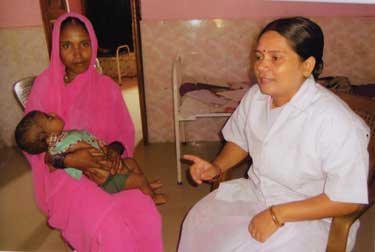
After the birth of her fifth child, Anita Devi (left) chose intrauterine contraception with the help and encouragement of nurse-midwife Rati Rani. Rani is among hundreds of nurse-midwives at the forefront of India’s postpartum family planning effort.
“My mother-in-law was against any form of contraception,” Mrs. Devi explained when asked about her previous births. “Though my second child was a son, she said that I should try for more sons. But my next children were girls. I was tired and felt I had nothing left in my body.”
Rani had heard such explanations before. In Bihar province, families have on average 3.7 children, and only 32.4 percent of women use any family planning method.
Rani and hundreds of other nurse-midwives across India are at the forefront of a targeted effort by the government of India to save lives by reinvigorating postpartum family planning (PPFP) services. With the support and technical expertise of Jhpiego and partners, India’s nurse-midwives are educating and counseling women about their family planning options during antenatal visits and introducing them to the intrauterine contraceptive device (IUCD). This long-acting method lasts for 10 years and can be inserted within 48 hours after giving birth. As part of its lifesaving work in India, Jhpiego is helping to reinvigorate vital family planning services in 16 states and assist the Indian Nursing Council in strengthening the education of nursing and midwifery students.
Mrs. Devi and her husband chose to have an IUCD inserted after she gave birth to her fifth child, a girl. “Every time I feel doubtful, I come to Rani,” she said. “She explains it all beautifully to me and now I am confident that I have done the right thing.”
Rani, 35, says the government initiative is having an impact in the 42 villages served by the Teghra Primary Health Center. Since January of this year, 241 women have been provided postpartum IUCD services, 186 of them by Rani.
She has seen firsthand the challenges women and their families face when burdened with too many children, often struggling to provide them with food and clothing. “The mother suffers in silence,” says Rani, who was trained by Jhpiego under the PPFP initiative supported by the Bill and Melinda Gates Foundation. “Only if we have smaller families will we be able to have healthier families where the children will get better nutrition and opportunities to educate themselves. Only then can we ultimately have a better and healthier society.”

Source:  http://www.impatientoptimists.org/Posts/2013/04/Family-Planning-After-Childbirth-Is-Critical-to-Womens-Health

Over 15,000 women die of pregnancy complications

Each year in Pakistan, more than 15,000 women die due to pregnancy related complications, among which Postpartum Hemorrhage that is blood loss exceeding 500ml at vaginal delivery and 1000ml at caesarean section is accounting for first leading cause of maternal death in our country.
Pakistan National Forum on Women’s Health President Dr Shershah Syed, Dr Shoaib Magsi, Dr Naseer Baloch, Dr Akhter Hameed expressed these views on Tuesday while speaking at a press conference held at the PMA House.
Dr Shershah Syed said that primary PPH was usually occurred due to uterine atony which was failure of the uterus to contract and retract which could be prevented by taking some necessary steps.
He said, “PPH in Pakistan is accounting for about 30 percent of all maternal deaths as almost every second women in Pakistan is anemic and small blood loss during labour leads her towards death. So the management of PPH is essential to produce a visible dent in current high maternal mortality rate.
On the basis of various scientific researches approved that the incidents of PPH may be avoided or prevented up to more than 60 percent with effective usage of urotonic medicines like Misoprostol. Misoprostol is a potent uterotonic medicine that helps reduce the incidents of postpartum hemorrhage. PPH can effectively be controlled if it is administrated according to WHO protocol (single dose of 400 to 600 micrograms) is given either sublingual or orally or per rectal immediately after delivery of the baby. Its demonstrated effectiveness in the prevention of postpartum hemorrhage is further enhanced by the fact that it is an inexpensive, easily available and convenient to use at community level by any healthcare provider including doctors, midwives, lady health visitors and lady health workers.
Pakistan National Forum on Women’s Health in collaboration with Small Grant Ambassador Fund Program (SGAFP) is initiating an intervention of training of health care providers on Management of PPH with Misoprostol in 8 selected districts of Sindh (Thatta, Badin, Tharparkar, Umerkot, Sanghar, Mirpurkhas, Jamshoro and Karachi) and five selected districts of Balochistan (Gwader, Turbat, Loralai, Sibi and Quetta), he said and added that the aim behind this intervention is to reduce maternal mortality and achieving MDGs 4-5 in Pakistan.

Source:  http://www.nation.com.pk/pakistan-news-newspaper-daily-english-online/karachi/20-Mar-2013/over-15-000-women-die-of-pregnancy-complications